What to Do When Even Cozy Cardio Feels Like Too Much
Quick Answer: When even a low-pressure cozy cardio session feels like too much, shrink the commitment further — 5 minutes, no goal beyond starting — because the barrier on these days is usually activation energy, not actual capacity, and a tiny start often unlocks the rest.
Cozy cardio exists specifically because regular workouts felt like too much pressure. So what do you do on the day even the slow treadmill walk with your show on feels like a mountain?

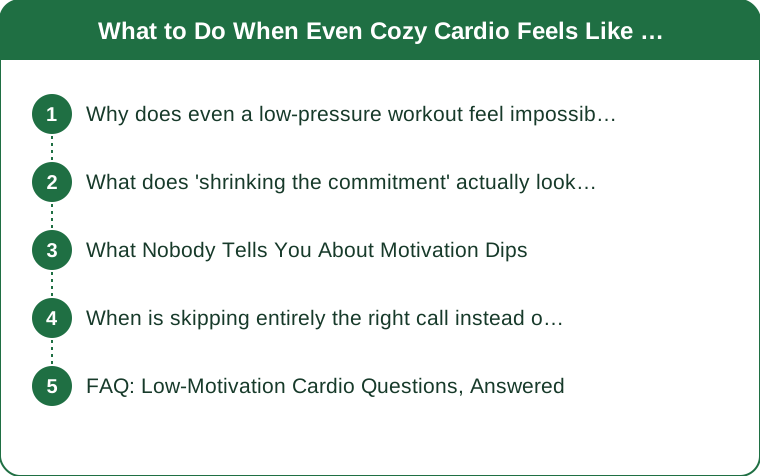
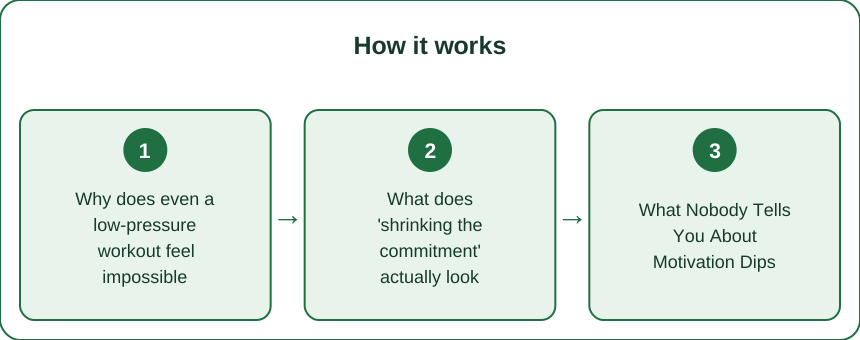
Why does even a low-pressure workout feel impossible sometimes?
Because motivation and activation energy are two different things. On low-capacity days, the issue usually isn’t that cozy cardio itself is too hard — it’s that starting anything requires a small burst of energy your brain doesn’t have available yet, regardless of how easy the actual task is.
This is why shrinking the commitment, not increasing the appeal, tends to work better on these specific days.
What does ‘shrinking the commitment’ actually look like?
1. Commit to 5 minutes only, with explicit permission to stop after that — not a trick, a real out.
2. Remove one more layer of friction than usual — shoes already by the door, show already queued, water bottle already filled.
3. Do the smallest possible version — a walk to the end of the block instead of the treadmill, stretching on the floor instead of a full session.
Most of the time, starting is the entire barrier — once moving, the session often continues past the 5-minute mark on its own.

What Nobody Tells You About Motivation Dips
Here’s the part that gets missed: a motivation dip on a cozy cardio routine isn’t a sign the routine failed. Cozy cardio was built precisely to lower the bar during exactly these low-energy periods — needing to lower it even further on a hard day is the system working as designed, not breaking down.
When is skipping entirely the right call instead of pushing through?
If the low motivation is paired with genuine physical exhaustion, illness, or a mental health low point, skipping and resting is the correct choice, not a failure of discipline. The 5-minute rule is for the ordinary days when motivation is low but capacity is fine — it’s not meant to override real signals that your body needs rest instead of movement.
FAQ: Low-Motivation Cardio Questions, Answered
How do I tell the difference between low motivation and needing real rest?
Low motivation usually lifts once you start moving; real fatigue or illness tends to feel worse with movement, not better — trust that difference over guilt.
Is it bad to have several low-motivation days in a row?
A string of low-energy days can be normal life, stress, or a sleep debt catching up — if it persists for weeks, it’s worth examining sleep, stress load, or talking to a doctor rather than just pushing through with tricks.
Does the 5-minute rule actually work long-term?
Yes for occasional low days — it’s specifically designed as a bridge, not a daily negotiation, so most people only need it a few times a month.
TL;DR:
- Shrink the commitment to 5 minutes with real permission to stop — activation energy is usually the barrier, not capacity
- Remove an extra layer of friction on hard days: shoes ready, show queued
- Needing to lower the bar further isn’t the system failing — it’s designed for exactly this
- Genuine exhaustion or illness means rest is correct, not a discipline failure
This is general information, not medical advice — if low motivation persists for weeks, that’s worth a look at sleep, stress, or a conversation with a doctor rather than another motivation trick.
See It in Motion
Seen here: Yoga Jogger Sweatpants with Pockets — shop it on bubblelime.com
Keep Reading
This article is for general informational and styling purposes only. Fit, sizing, and product availability may vary.