Cozy Cardio and the First Dark Morning of Fall: How to Keep the Habit When the Sun Leaves
Quick Answer: Your morning routine did not fail - your light cue did. Sunrise shifts roughly 1-2 minutes later per day in late summer, and by mid-October most people are waking in full dark. The fix is to replace the missing light signal: 10-20 minutes of bright light within 30 minutes of waking (a 10,000 lux lamp or any bright indoor light), a fixed wake time within a 30-minute window, and lowering the effort bar for the first two weeks of the shift.
Every year the same thing happens. August mornings feel effortless, then somewhere in the second half of September you start hitting snooze, and by the time the clocks change you have quietly stopped. Then you decide you have no discipline. You have plenty of discipline. What you lost was a cue.
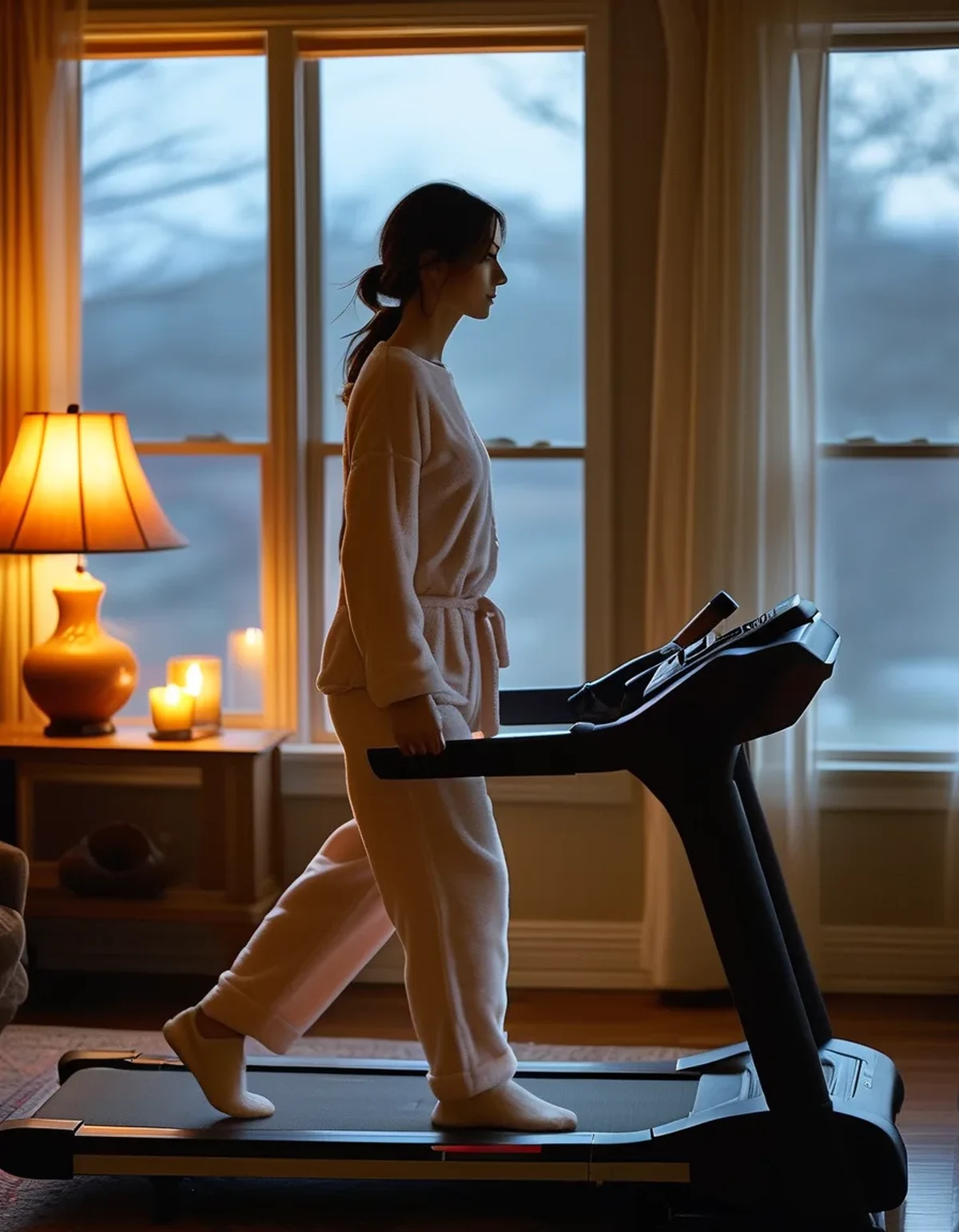
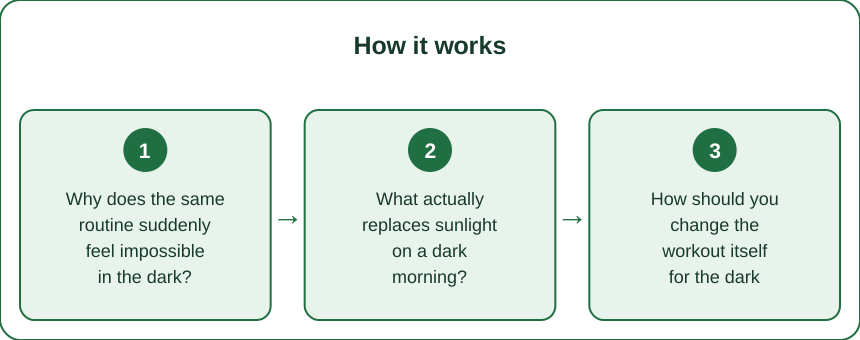
Why does the same routine suddenly feel impossible in the dark?
Your wake time is not driven by willpower, it is driven by a body clock that takes its strongest instruction from light hitting your eyes. Morning light suppresses melatonin and anchors the whole timing system for the day.
When you wake before sunrise, that instruction never arrives. Melatonin lingers, core body temperature is still at its overnight low, and the grogginess window - sleep inertia - stretches longer than it did in July. The rowing machine did not get harder. Your body is still in night mode when you ask it to move.
The swing is bigger than people expect. Between the summer solstice and mid-October, sunrise in most of the continental US moves later by more than an hour and a half. That is a substantial cue shift, and it happens gradually enough that you never notice the day it broke.
There is a mood layer too. Reduced morning light exposure is associated with lower mood and energy in a meaningful share of people, and low mood is the thing that turns a five-minute start into no start at all.
The practical takeaway: stop treating this as a motivation problem. It is a signal problem, and signal problems have equipment solutions.
What actually replaces sunlight on a dark morning?
Brightness is measured in lux, and the numbers are much further apart than they look.
- Typical living room lighting: 50-200 lux
- Bright kitchen with everything on: 300-500 lux
- A 10,000 lux light therapy lamp at arm’s length: 10,000 lux
- Overcast morning outdoors: 1,000-10,000 lux
- Clear summer morning outdoors: 50,000+ lux
This is why turning on a lamp does not feel like sunrise. It genuinely is not close.
What works, in order of effect:
- A light therapy lamp, 10,000 lux, positioned off to the side at about 16-24 inches, used for 20 minutes while you move. You do not stare at it. Placing it beside a walking pad or at eye level near your mat is the entire setup.
- Every light in the room on, which gets you to maybe 500 lux - not a substitute, but far better than one lamp.
- Stepping outside for 5 minutes after sunrise later in the morning. Even overcast daylight beats the brightest indoor lighting.
A sunrise alarm clock that ramps up over 30 minutes helps with the waking part specifically, and it stacks well with a bright lamp once you are up.
If you have a bipolar diagnosis, an eye condition, or take photosensitizing medication, check with a clinician before starting bright light therapy. This is general information, not medical advice.
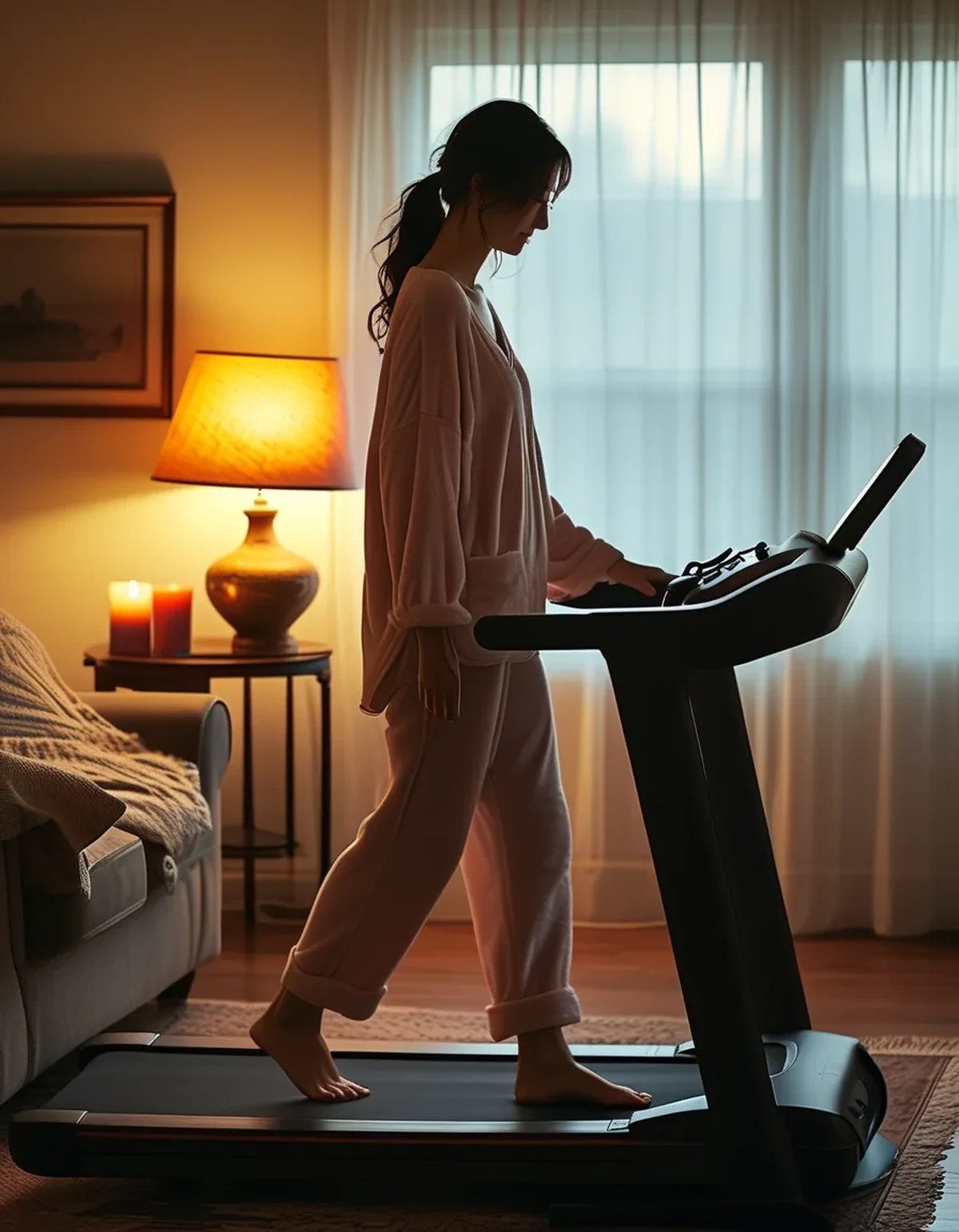
How should you change the workout itself for the dark season?
The instinct is to keep the routine identical and push through. That is exactly what breaks the streak.
Lower the entry bar, keep the frequency. The core insight of cozy cardio was always that a consistently completed easy session beats a frequently skipped hard one. In the transition weeks, cut the duration in half and keep the days. Twenty minutes becomes ten. The point of October is not fitness gains, it is not losing the habit before November.
Move the enjoyable part to the front. In summer you could start with movement and add the show or the coffee afterward. In the dark, front-load the reward - candle lit, drink poured, episode queued before you step on the pad. The first ninety seconds is the whole battle.
Prepare the night before, physically. Shoes and clothes out, walking pad positioned, lamp plugged in and switched on at the wall. Every decision you remove from a groggy brain is worth roughly five minutes of willpower.
Warm up longer. A cool house plus a cold body means stiff ankles and calves. Give yourself 3-5 minutes at a genuinely slow pace before settling into your normal one.
Expect a two-week adjustment. Circadian systems shift gradually. If the first week feels awful, that is the normal shape of the curve, not evidence you should quit.
5 Mistakes Everyone Makes When the Mornings Get Dark
1. Letting the wake time drift. A 6:00 alarm on weekdays and a 9:00 wake on weekends creates a two-and-a-half-hour internal time zone shift every Monday. Keeping wake time inside a 30-minute window all seven days is the highest-leverage sleep habit there is, and it matters more in dark months than any other time of year.
2. Adding caffeine earlier instead of adding light. Caffeine masks sleep inertia, it does not shift the clock. It also lingers - caffeine has a half-life around 5-6 hours, so a 5:30 am double shot is still measurably in your system mid-afternoon and quietly makes tomorrow’s wake harder.
3. Going to bed later than in summer. Darker evenings feel longer and the couch gets comfortable. If wake time is fixed and bedtime drifts 45 minutes later, you are running a sleep deficit and calling it low motivation.
4. Scrolling in bed to wake up. A phone at close range is a few hundred lux at best - it is not enough light to shift anything, and it consumes the ten minutes that would have started the session. The third mistake surprises people, but this one is the one that actually eats the most mornings.
5. Deciding to restart in January. The routine you keep at 40% through October and November is worth more than the perfect routine you plan for a fresh start. Habits survive on continuity, not intensity.
FAQ: Dark Morning Movement Questions, Answered
How long before a light therapy lamp actually works?
Most people notice easier waking within 3-7 days of consistent morning use. The key variables are timing (within 30 minutes of waking), duration (20 minutes at 10,000 lux), and consistency. Skipping days resets much of the benefit.
Is it better to just move my workout to the evening?
If mornings genuinely do not work for your season, yes - a completed evening session beats a skipped morning one every time. The one caution is that vigorous exercise within about an hour of bedtime disrupts sleep for some people. Cozy cardio is gentle enough that this is rarely an issue.
Do I need an expensive lamp?
No. The specification that matters is 10,000 lux at a stated distance and UV filtering. Reputable options exist well under $50. What matters far more than the model is whether it lives somewhere you will actually switch it on.
What if I wake up in the dark and just feel low, not tired?
Seasonal mood changes are common and real, and light exposure is a first-line self-care step for mild cases. If low mood persists for more than two weeks, affects your work or relationships, or comes with hopelessness, that is worth talking to a professional about - not something to solve with a treadmill.
TL;DR:
- The habit breaks because the light cue disappears, not because your discipline did.
- Replace it: 20 minutes of bright light within 30 minutes of waking, ideally while you move.
- Keep the frequency, halve the duration during the transition weeks.
- Fix wake time within a 30-minute window, seven days a week, and prep everything the night before.
The goal for the next eight weeks is not progress. It is continuity. If you get on the pad for ten minutes with a lamp on and a warm drink in hand, you have won the morning - and the version of you in February who never stopped is going to be extremely glad you did.
See It in Motion
Seen here: High Waist Drawstring Wide Leg Yoga Pants with Pockets — shop it on bubblelime.com
Keep Reading
This article is for general informational and styling purposes only. Fit, sizing, and product availability may vary.